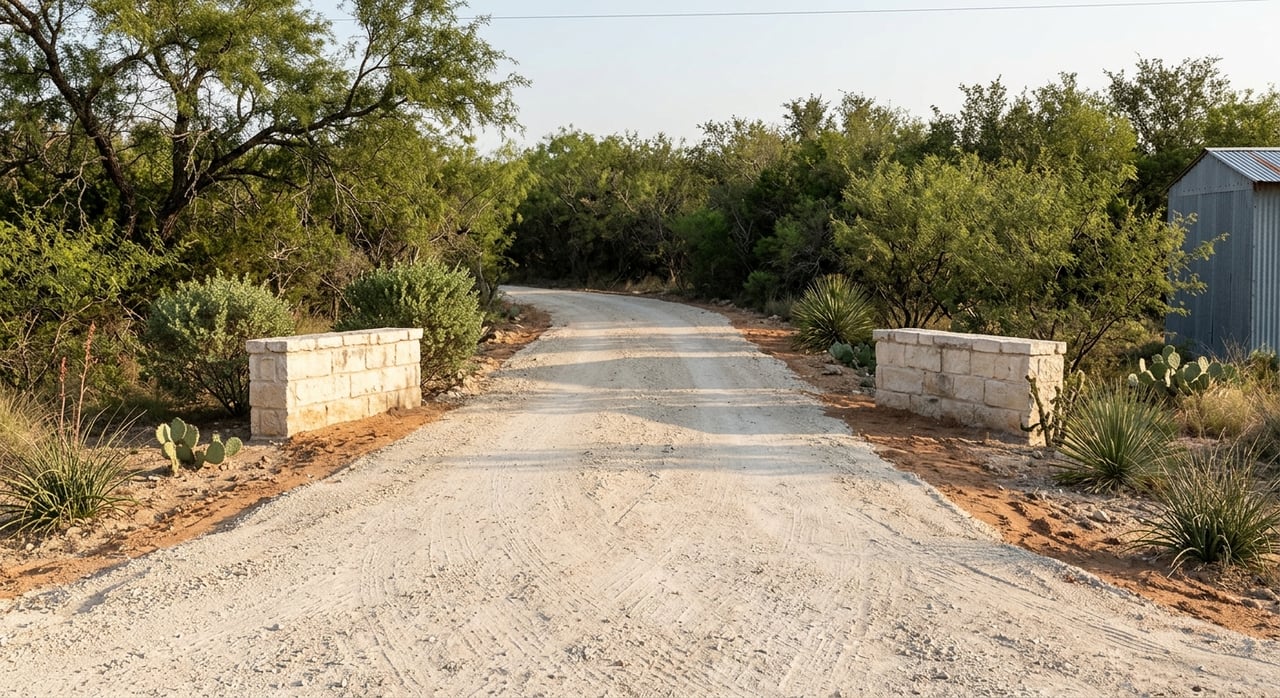
If you are looking at land in Atascosa County, the word transitional can sound bigger and faster-moving than the reality on the ground. In many cases, you are not looking at land that is about to change overnight. You are looking at working rural property that may hold long-term flexibility because of location, access, and gradual growth patterns. Let’s break down what transitional land potential really means in Atascosa County and how you can evaluate it with a clear head.
What Transitional Land Means
In Atascosa County, transitional land usually refers to rural property that is still being used today as ranch, pasture, cropland, or recreational land, but may sit in an area where the surrounding context changes over time. That change can come from population growth, transportation access, or nearby land-use shifts.
That distinction matters. A tract can be productive and valuable in its current form while also offering future optionality. In this county, transitional potential is often more about position and timing than immediate conversion.
Why Atascosa County Gets This Label
Atascosa County still has a strong working-land identity. The U.S. Census QuickFacts for Atascosa County estimates 52,783 residents in 2024 across 1,219.54 square miles, or about 40.2 people per square mile.
That low-density pattern lines up with the county’s agricultural base. According to the USDA county profile for Atascosa County, there were 1,673 farms covering 688,382 acres in 2022. Pastureland accounted for 519,046 acres, compared with 81,698 acres of cropland and 63,638 acres of woodland.
The same USDA profile shows that 75% of farm sales came from livestock, poultry, and related products, while 25% came from crops. In plain terms, this is still a county where working ranch and farm uses dominate the landscape. That is why transitional land here is usually not a short-term redevelopment story.
Growth Is Steady, Not Sudden
Atascosa County does show signs of long-run growth pressure. The Texas Demographic Center projections show population rising from 49,290 in 2020 to 55,102 in 2030 and 60,450 by 2060.
That kind of trend matters, but the pace is important. These figures point to gradual change over many years, not a sudden population spike. For buyers and sellers, that supports a practical mindset: think in years to decades, not months.
Transportation Corridors Matter
One reason some tracts in Atascosa County get described as transitional is access. The county is served by major routes including I-37, US 281, SH 16, SH 97, and SH 173, as noted in the county’s hazard mitigation planning materials.
For land buyers, corridor access can influence future flexibility. A tract located near a major highway may not change use anytime soon, but it may attract different types of long-term interest than a more remote parcel surrounded by large blocks of pasture or ranchland.
Transportation planning also shows that these corridors continue to receive attention. Atascosa County falls within TxDOT’s San Antonio District, and the county is included in rural transportation planning through the 2027 to 2030 process.
Current TxDOT project listings for Atascosa County show work tied to US 281, SH 16, SH 97, IH 37, and several FM roads. These projects include safety, sidewalk, signal, overlay, and pavement-marking work. That does not guarantee land-use change, but it does confirm that key corridors are being maintained and improved over time.
Current Use Still Comes First
One of the biggest mistakes buyers make is focusing too much on what a property might become and not enough on what it is today. In Atascosa County, that can lead you away from the clearest measure of value.
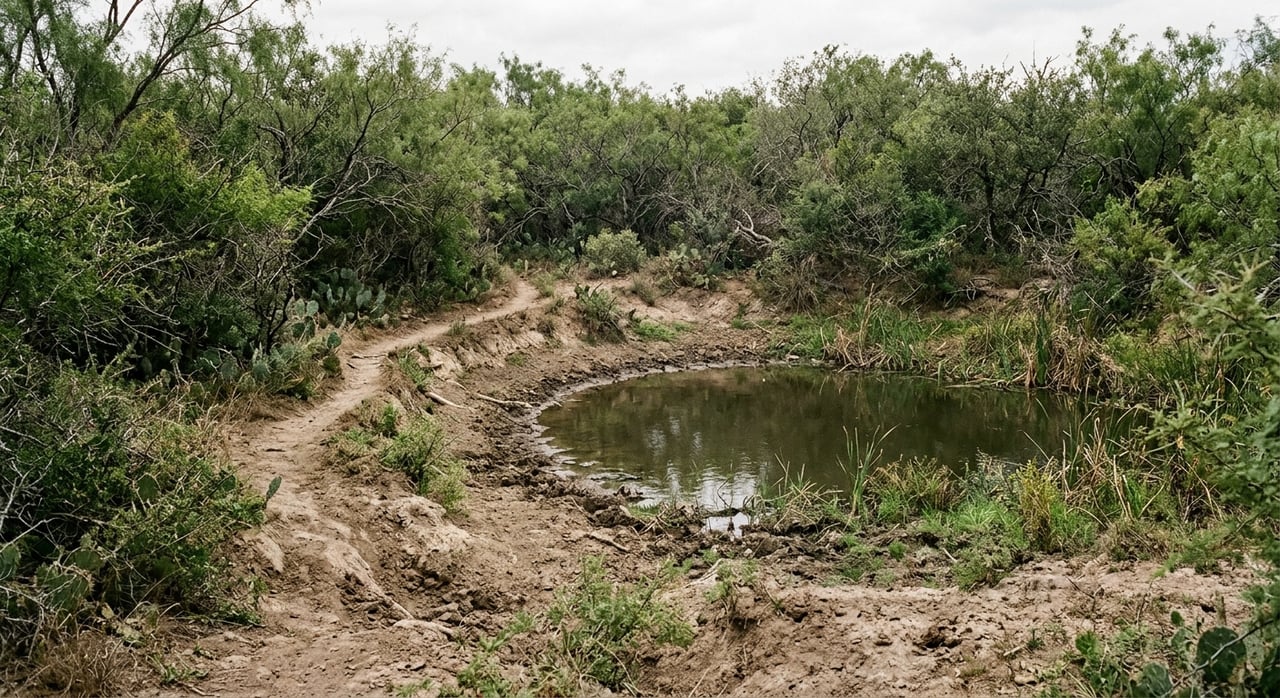
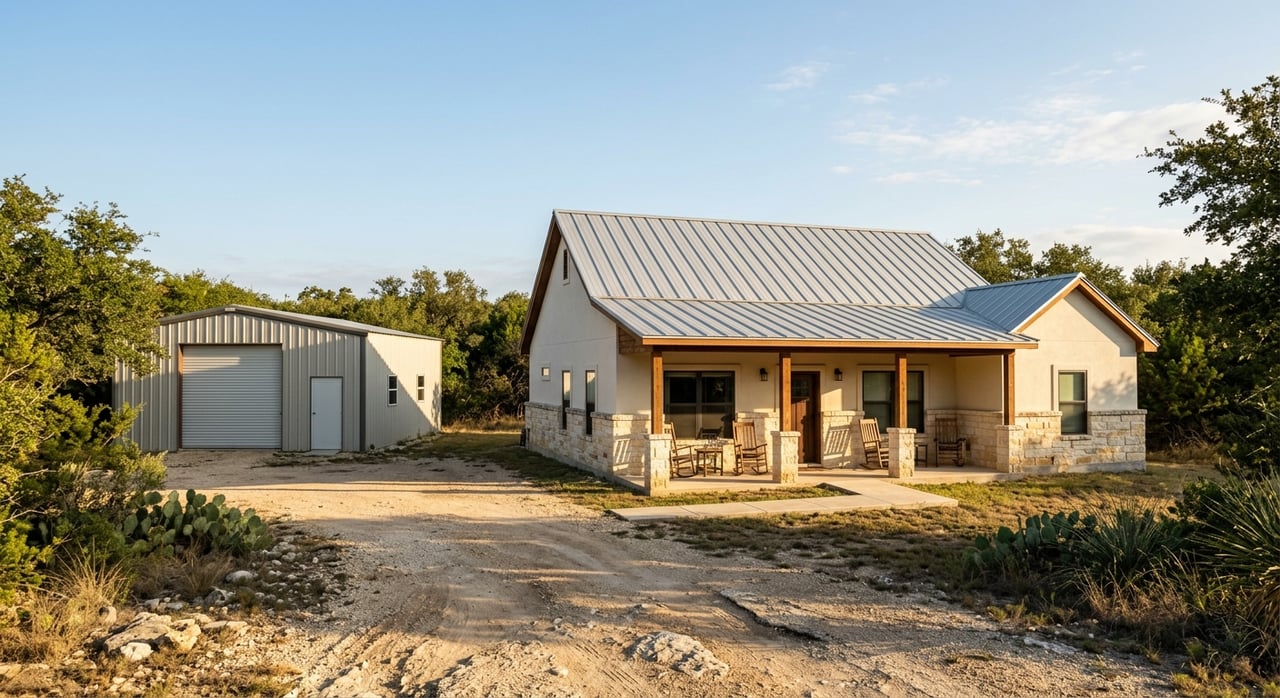
Because the county’s land base is still heavily tied to pasture, livestock, and rural operations, many tracts may make the most sense today as ranchland, hunting land, or general recreational acreage. A property with transitional potential should still stand on its own current utility.
That is especially important in a county where the agricultural foundation is so strong. If a tract works well now for grazing, recreation, or long-term hold purposes, future optionality can be a bonus rather than the only reason to buy.
How to Evaluate Transitional Potential
If you are trying to size up a tract in Atascosa County, it helps to think in a few simple categories.
Look at Surrounding Land Use
Start with what surrounds the property today. Is it in an area dominated by pasture, cropland, and large working tracts, or is it closer to corridors and patterns of activity that could support change over time?
This is one of the clearest ways to frame transitional potential. Land that is fully embedded in agricultural use may stay that way for a very long time, while land near key routes may carry more future flexibility.
Study Corridor Access
Access is not everything, but it matters. Proximity to highways like I-37, US 281, SH 16, SH 97, or SH 173 can shape how a tract functions today and how buyers may view it in the future.
Good access can support current ranch, recreational, or investment use while also adding long-term appeal. In land, optionality often starts with how easily a property connects to the broader area.
Weigh Present-Day Productivity
A tract does not need near-term development pressure to be a strong purchase. In Atascosa County, current operating value is a major part of the equation.
If land is useful now for grazing, agricultural activity, hunting, or general rural enjoyment, that utility matters. Transitional potential is strongest when the property already offers a solid use case instead of relying only on future speculation.
Keep Your Timeline Realistic
In this county, transitional land is usually a long-horizon concept. Public data points to gradual population growth, a large agricultural footprint, and transportation improvements that unfold in multi-year cycles.
That is why expectations matter. If you are evaluating a tract here, it is wise to think in terms of patient ownership and long-term flexibility rather than quick change.
Prime Farmland Adds Another Layer
The county’s planning materials note that about 41% to 50% of Atascosa County is considered prime farmland. That is another reason land-use change tends to be more nuanced than broad assumptions might suggest.
When a county has strong agricultural fundamentals, land can retain meaningful value in farm and ranch use even as some areas gain future corridor-driven interest. In other words, working-land quality and transitional potential can exist at the same time.
A Practical Way to Think About It
A simple way to frame transitional land in Atascosa County is this: current use first, future optionality second. If a tract performs well today as ranch, hunting, pasture, or recreational land and also sits near access routes or evolving surroundings, it may fit the description of transitional.
If it does not have those location factors, it may still be excellent rural land. It just may be better understood as a strong agricultural or recreational property rather than a tract with meaningful near- or mid-term transition potential.
That kind of clear-eyed evaluation is important whether you are buying for lifestyle, investment, or long-term family ownership. In land, the best decisions usually come from understanding what the property is now, what supports its value today, and what realistic paths may exist down the road.
If you want help evaluating South Texas land with a practical, land-first approach, Craig Wilson South Texas Land can help you look at access, current use, and long-term fit with fewer surprises along the way.
FAQs
What does transitional land mean in Atascosa County?
- In Atascosa County, transitional land usually means rural property that still functions as ranch, pasture, cropland, or recreational land today but may have long-term flexibility because of location, access, and nearby land-use patterns.
Is Atascosa County seeing fast growth that could quickly change land use?
- No. Available population projections point to steady, gradual growth over time rather than a sudden boom, which means land-use change is generally more incremental than immediate.
What roads matter most when evaluating land in Atascosa County?
- Major corridors noted in county and TxDOT materials include I-37, US 281, SH 16, SH 97, and SH 173, and access to these routes can influence how a tract is viewed for current use and long-term flexibility.
Does transitional land in Atascosa County mean development is coming soon?
- Not necessarily. In this county, transitional potential usually describes future optionality over a long timeline, not guaranteed or immediate change.
How should buyers evaluate transitional land in Atascosa County?
- Buyers usually look at surrounding land use, corridor access, and the tract’s current operating value for uses like ranching, grazing, hunting, or recreation, then weigh those factors against a realistic long-term timeline.
Can land still be valuable if it is not truly transitional?
- Yes. Many Atascosa County properties may be most valuable for their present-day agricultural or recreational utility, even if they do not have strong indicators of future land-use transition.