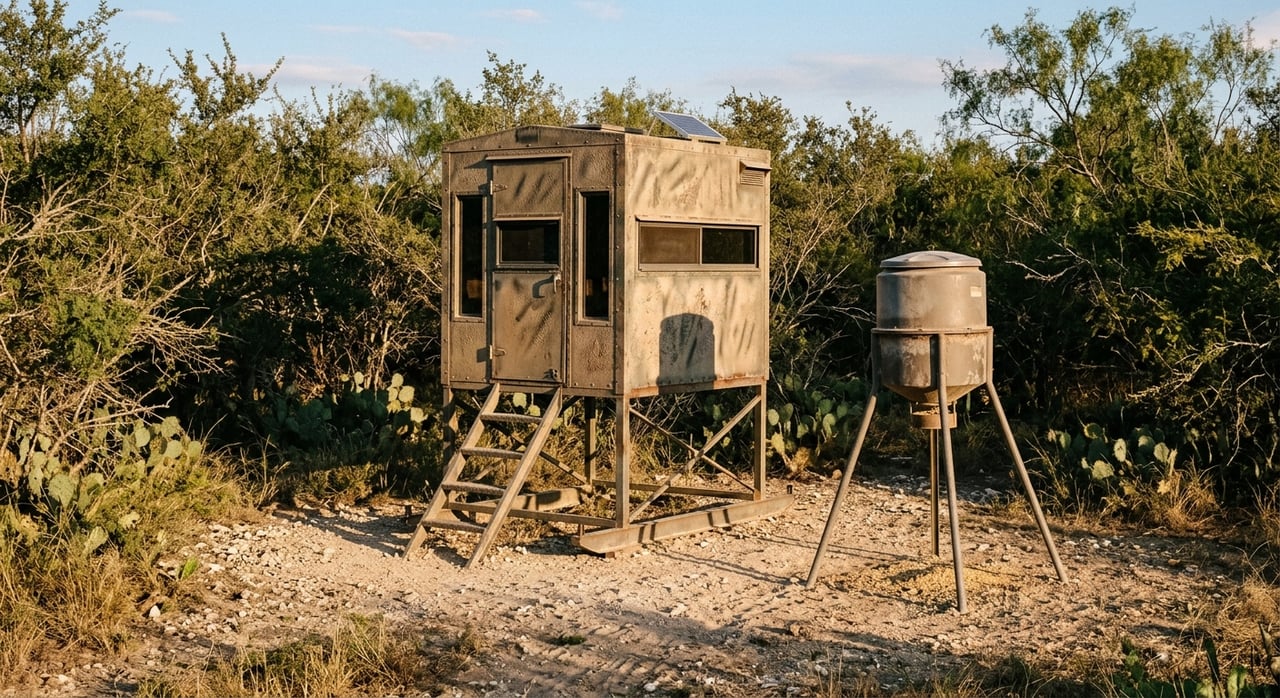
If you want a hunting place in Frio County, more infrastructure is not always better. In South Texas brush country, a simple setup often works harder for you, costs less to maintain, and fits the land more naturally. If you are trying to plan a practical camp, feeder layout, and access system on acreage, this guide will help you think through the basics with Frio County conditions in mind. Let’s dive in.
Why simple works in Frio County
Frio County sits in the Northern Rio Grande Plain land resource area, and the county hazard plan cites about 23.82 inches of annual precipitation at the Pearsall weather station. In practical terms, that means you are usually dealing with dry brush-country conditions where water, shade, and native cover matter more than a polished, high-maintenance footprint. You can review that county context in the Frio County hazard mitigation plan.
Texas Parks and Wildlife Department describes South Texas Brush Country as a landscape of thorny shrubs and trees. TPWD also notes that deer need food, water, cover, and space, which is a helpful framework when you are evaluating any hunting tract or planning improvements. In many cases, a compact camp and a limited number of well-placed improvements make more sense than trying to reshape the property.
The region can support a range of wildlife uses. TPWD identifies habitat here for white-tailed deer, bobwhite quail, scaled quail, Rio Grande turkeys, mourning doves, white-winged doves, and chachalacas, with javelina also associated with the South Texas Brush Country. You can explore those habitat notes through TPWD’s South Texas upland birds and habitat resources.
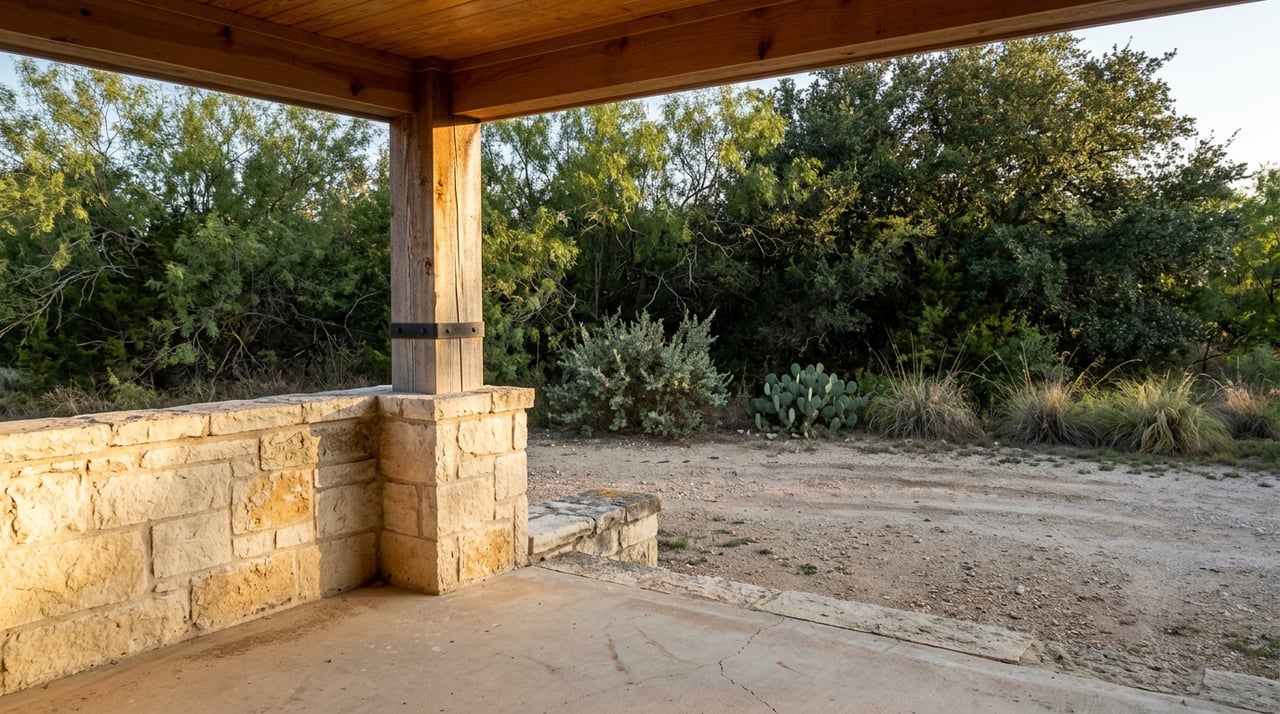
Keep the camp footprint small
A low-maintenance hunting setup usually starts with restraint. TPWD’s erosion guidance recommends preserving existing vegetation as much as possible, limiting grading and plant removal, and preserving the natural contours of the land. That matters because earthmoving and unnecessary clearing can create erosion problems and add long-term upkeep.
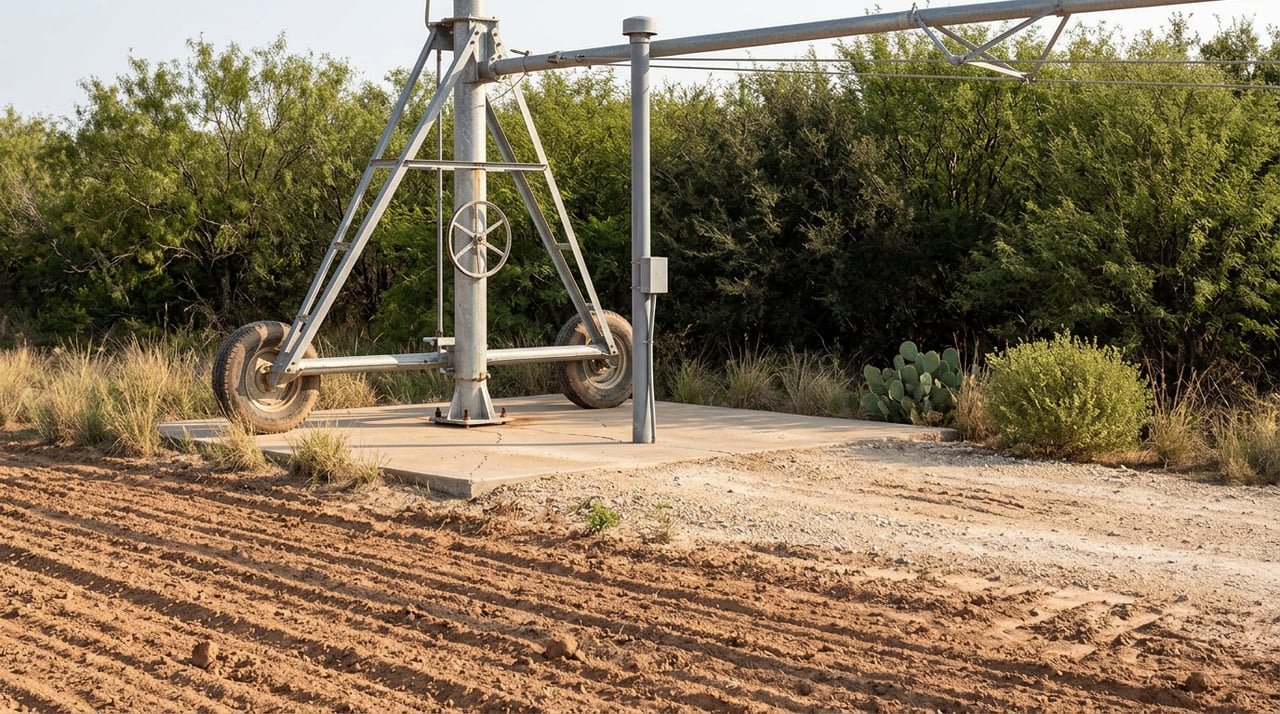
On Frio County acreage, the easiest plan is often to reuse an existing clearing, sendero, or disturbed pad for the main camp area. That can include your parking area, a storage building, and a small cleaning or utility space without cutting several new openings into native brush. You can read more in TPWD’s erosion and land stewardship guidance.
A simple camp setup often includes just a few essentials:
- A compact sleeping or day-use structure
- Secure storage for feed, tools, and gear
- One defined parking area
- A clean utility zone for game handling and cleanup
- Easy access to one dependable water source
If your goal is weekend use rather than full-time occupancy, this kind of layout is usually easier to maintain between trips.
Plan water with purpose
In a county with modest rainfall, water planning deserves extra attention. TPWD notes that supplemental wildlife water can come from wells, troughs, windmill overflows, shallow wetlands, ponds, or guzzlers, and these features may need protection from livestock. That does not mean you need several water installations scattered across the ranch.
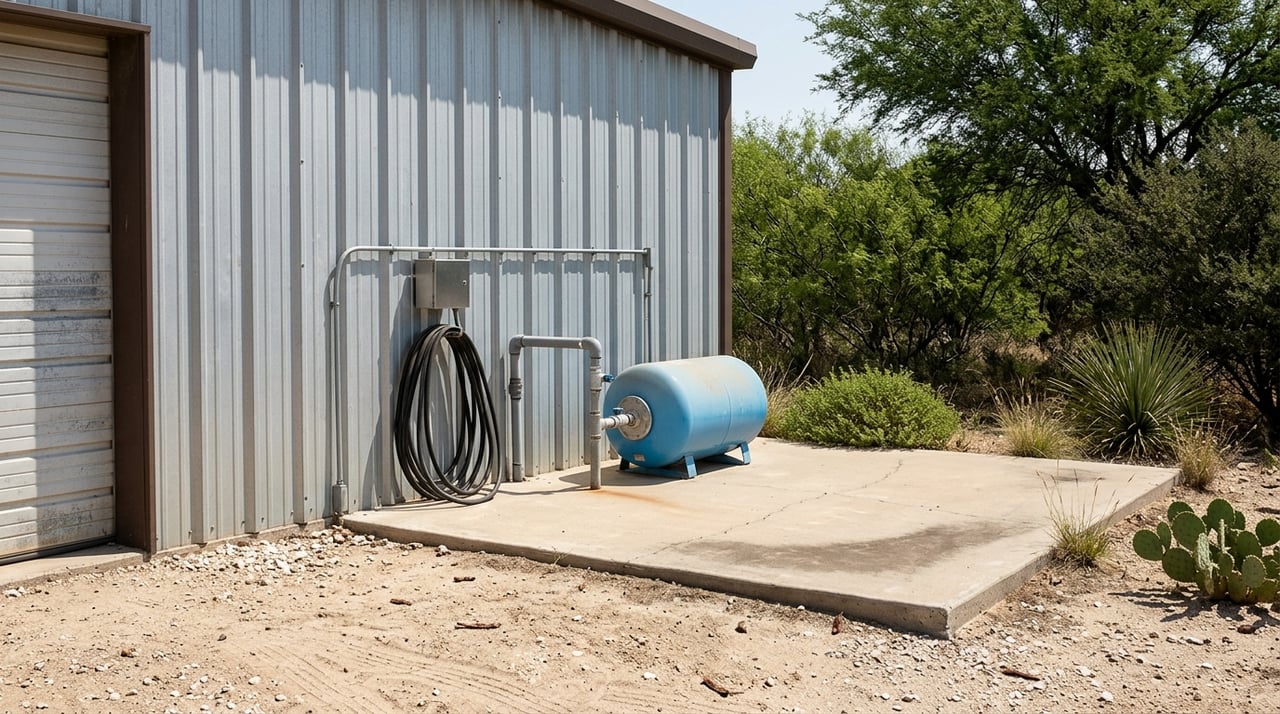
For many buyers, a more manageable plan is to think in two parts. First, have a dependable water source that serves the camp and your day-to-day operational needs. Second, consider a separate wildlife water point where it fits the land and can be maintained consistently.
That approach can reduce repairs, reduce inspection time, and make it easier to monitor what is actually working. It also keeps you focused on reliability instead of building more than the property needs.
Protect native cover first
If you are setting up a hunting property, habitat should drive the layout. TPWD’s South Texas deer guidance says sound habitat management is the single most important factor in maintaining a healthy deer herd. It also warns that clearing too much brush, removing desirable species, disturbing saline soils, or letting deer numbers exceed carrying capacity can reduce herd quality.
That has a direct impact on how you should think about improvements. Instead of opening large areas for convenience, try to keep native brush structure intact and let your setup fit around it. TPWD also says brush clumps or strips should be wide enough that you cannot see through them in winter and continuous enough to function as travel lanes. You can review those principles in TPWD’s South Texas deer habitat guidance.
A practical rule of thumb is simple: clear only what you need to use safely and maintain easily. The more cover you leave in the right places, the more the property can continue functioning as habitat.
Place feeders and blinds for efficiency
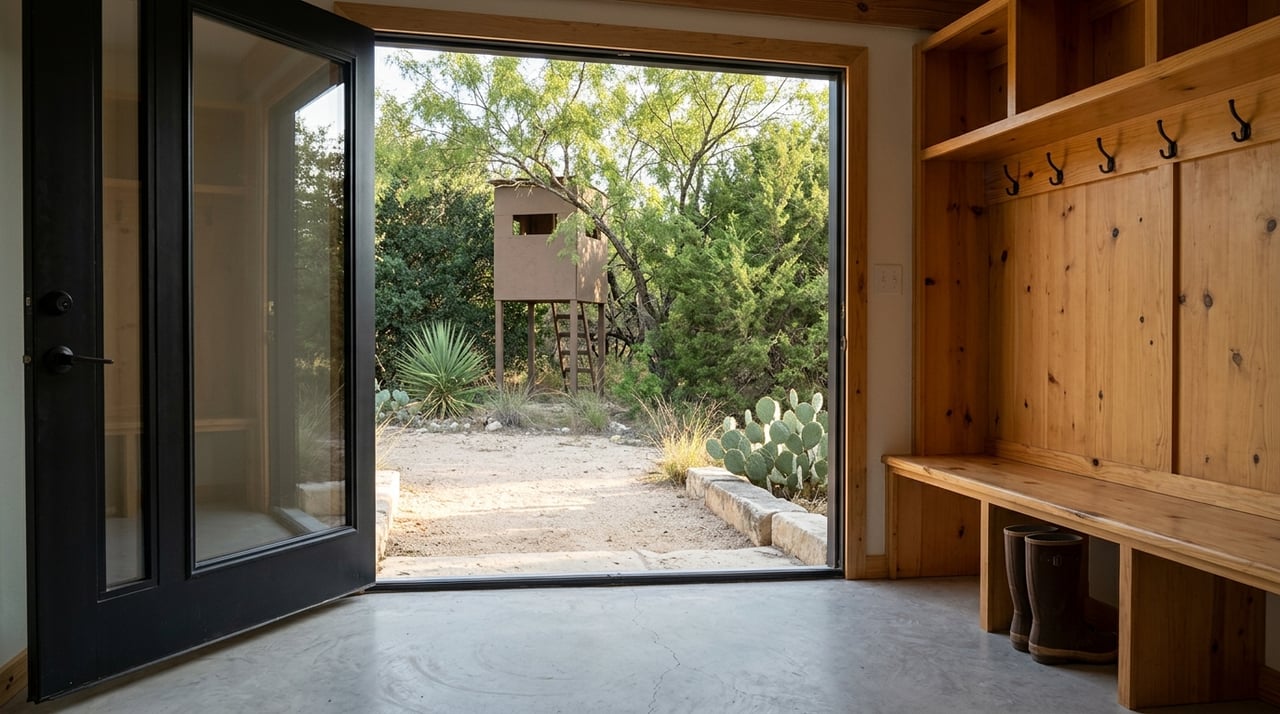
A low-maintenance setup usually benefits from fewer, better-positioned stations. Rather than spreading feeders and blinds all over the acreage, it often makes more sense to place a limited number near short access routes and in spots that work with existing cover.
This approach can help you in several ways:
- Less road and trail maintenance
- Less fuel and time spent checking equipment
- Less disturbance across the tract
- Easier monitoring of feed use and wildlife movement
TPWD also makes an important point about supplemental feeding. Feeders are not a substitute for native habitat, and feeding should not be used to push deer numbers beyond what the land can support. In other words, feeders may support your setup, but they should not be the foundation of it.
It is also important to stay current on species-specific rules. TPWD allows baiting for game animals, nongame animals, and upland game birds, with exceptions that include East Zone wild turkey and migratory game birds, and baiting is unlawful on most public property. Because rules and seasons can change, it is smart to verify current details in the 2025-26 TPWD hunting seasons pages and related regulations before each season.
Limit roads and shooting lanes
One of the easiest ways to overbuild a hunting tract is with roads. Wide, frequent roads may feel convenient at first, but they can break up cover, increase erosion risk, and create more mowing or clearing work than most owners want.
In many cases, a better plan is a small number of internal lanes that stay well inside the property boundaries. Short access paths to blinds and feeders are often easier to maintain than a dense road network. This kind of layout also works better with TPWD’s habitat guidance, which emphasizes keeping cover strips and travel lanes intact.
Safety should shape your layout too. TPWD prohibits discharging a firearm on or across a public road, hunting from public roads, and knowingly sending a projectile across a property line without written permission. TPWD also prohibits using drones to hunt, locate wounded animals, or harass wildlife. You can review those rules in the TPWD means and methods regulations.
Build a camp that is easy to clean
A hunting camp should be simple to maintain after the hunt, not just easy to enjoy during it. TPWD’s current regulations explain chronic wasting disease, or CWD, as a fatal disease and outline check-station information and statewide carcass disposal requirements for white-tailed deer and mule deer.
That makes it smart to include a basic handling area that is easy to sanitize and a clear plan for meat transport and waste disposal. Even if your camp is modest, it helps to think through cleanup flow before you ever need it. TPWD’s current regulations are available in the Outdoor Annual regulatory guide.
A straightforward handling area may include:
- A washable surface
- Nearby water access if available
- Defined storage for knives, gloves, and cleaning supplies
- Easy vehicle access for loading out
- A simple disposal plan that follows current rules
Use local guidance before building
One of the best ways to avoid expensive mistakes is to ask for local technical input before making permanent changes. TPWD’s Frio County wildlife-biologist page lists Daniel Kunz as the technical guidance wildlife biologist, along with other regional contacts.
If you are thinking about brush work, water placement, access planning, or habitat improvement, local guidance can help you confirm whether your plan fits the tract. That is especially useful if you are buying raw acreage and trying to decide which improvements are truly necessary. You can find county-specific contacts on TPWD’s Frio County wildlife biologist page.
What buyers should look for first
If you are shopping for Frio County acreage, it helps to evaluate the land in the same order you would build it. Start with native habitat, water reliability, and access, then think about where a camp and a few hunting improvements could fit with minimal disturbance.
A useful buyer checklist includes:
- Existing clearings or disturbed pads that could support a camp
- Internal access that does not require major new road building
- Native brush cover and travel lanes already in place
- A realistic water plan for both use and wildlife needs
- Room for a few practical feeders or blinds without over-clearing
- Safe lane orientation that stays well inside boundaries
That kind of review can tell you a lot about whether a tract will stay low-maintenance after closing. It also helps you separate acreage that looks good on paper from acreage that functions well in real-world use.
A well-planned hunting property in Frio County does not need to be complicated to be effective. In this part of South Texas, a simpler setup often means less disturbance, less upkeep, and a better fit with the land’s natural cover, water demands, and wildlife patterns. If you are evaluating acreage and want a practical, land-first perspective on how a tract may function for hunting and long-term use, connect with Craig Wilson South Texas Land.
FAQs
What makes a hunting setup low-maintenance on Frio County acreage?
- A low-maintenance setup usually keeps the camp compact, reuses existing clearings, limits new roads, and places only a few feeders or blinds where they are easy to access and maintain.
How much brush should stay on a Frio County hunting property?
- TPWD guidance supports keeping native cover and continuous brush strips in place so they can function as travel lanes and habitat, rather than over-clearing for convenience.
Can feeders replace habitat on South Texas hunting land?
- No. TPWD states that supplemental feeding is not a substitute for native habitat and should not be used to support more deer than the land can naturally carry.
Where should water go on a Frio County hunting tract?
- A practical plan is often one dependable water source for camp use and a separate wildlife water point where it fits the land and can be maintained consistently.
Where can you verify current hunting rules for Frio County, Texas?
- The best source is the current TPWD Outdoor Annual, including the latest hunting season pages and statewide regulations.