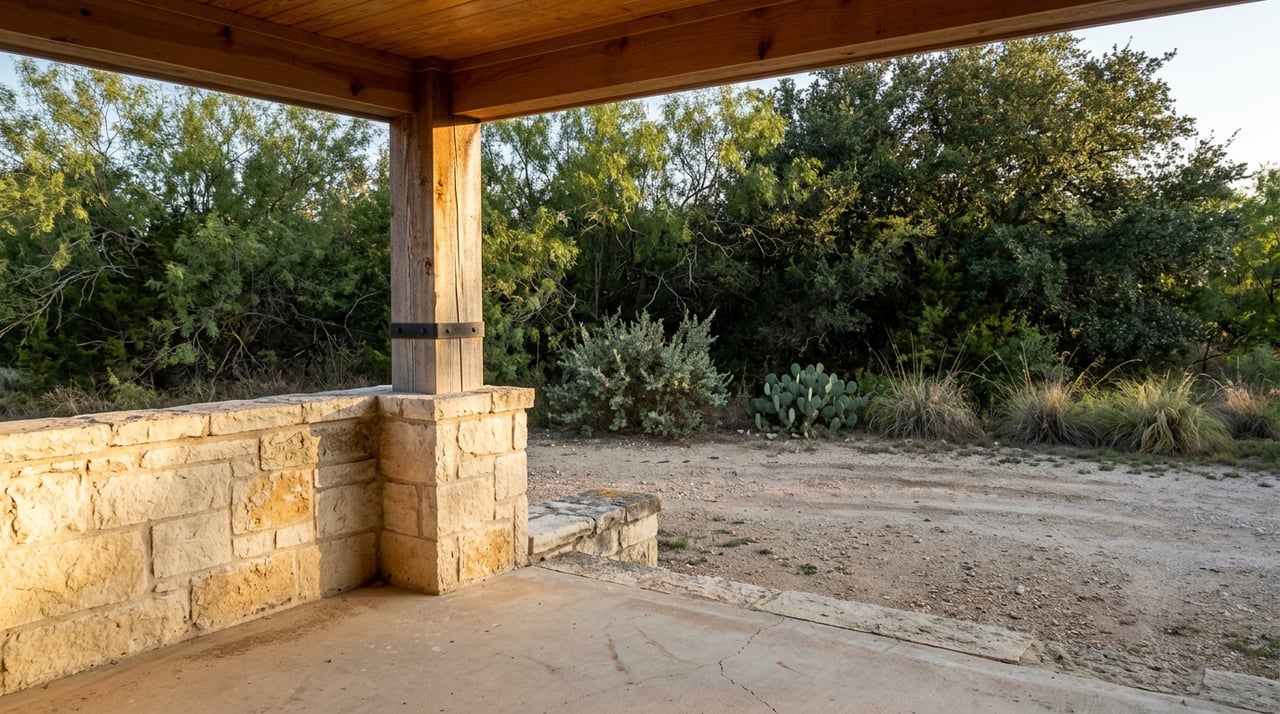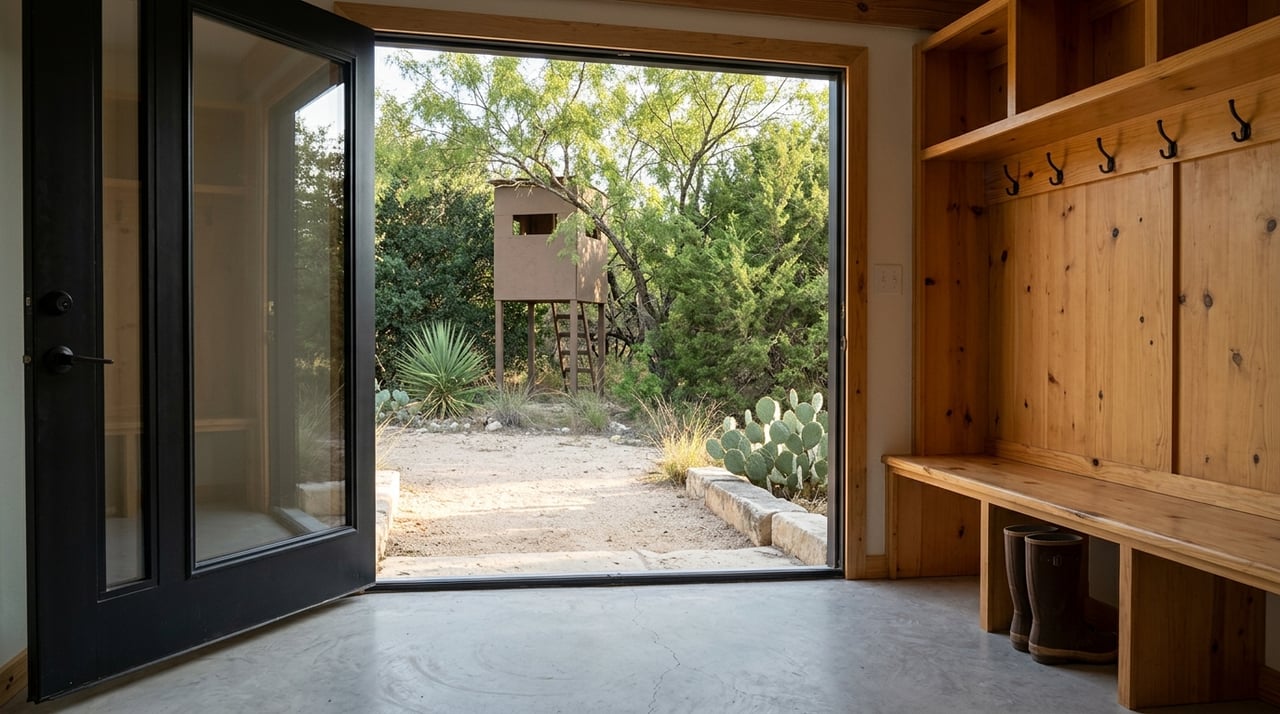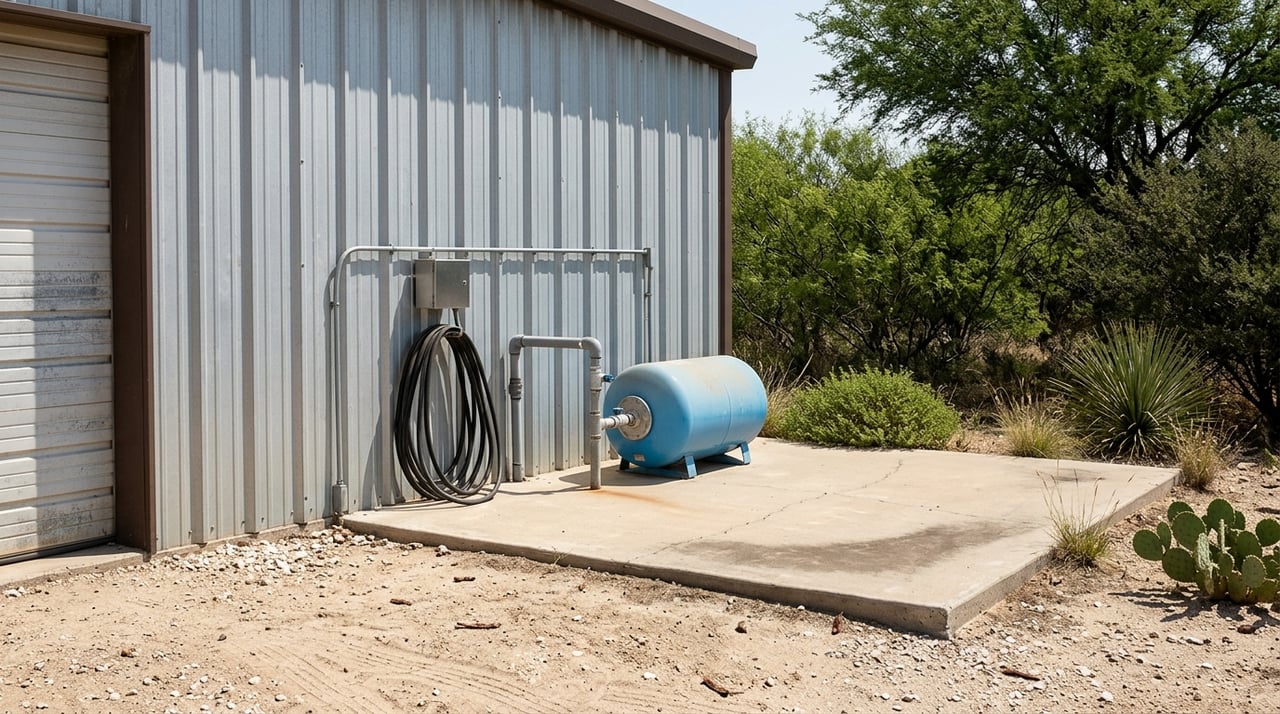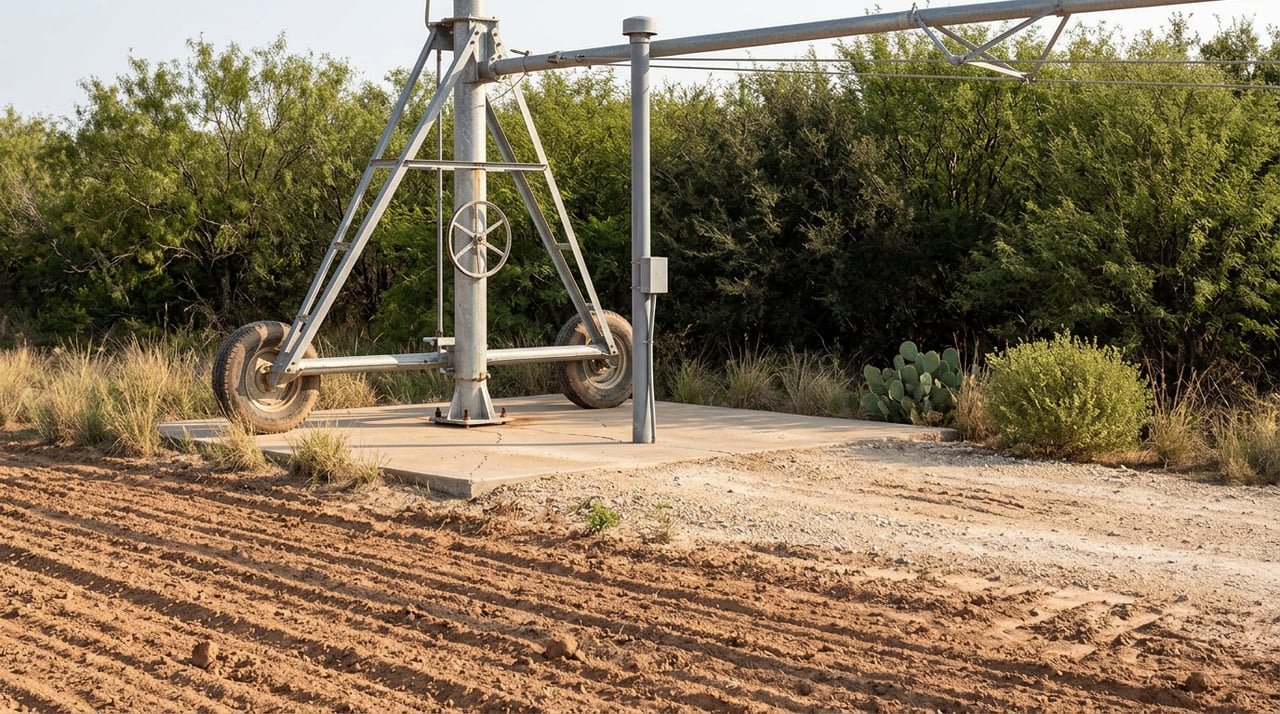
Pull up Zavala County on one listing portal and the median price per acre reads $4,002. Open a second portal and the number jumps to $12,822. A third reports an average asking price closer to $14,282 per acre. Same county, same week, roughly three times the number.
Both readings are correct. They describe two different products sitting under the same county line, and the gap between them is the clearest signal a buyer will get about what actually drives value in the Winter Garden.
The Two-Medians Problem
The spread is not a data error. It is the market pricing water.
| Data source | Reported figure | What it captures |
|---|---|---|
| All-land median, Land.com | $4,002/acre | Mix skewed by large brush and hunting tracts |
| Undeveloped-land median, Land.com | $12,822/acre | Smaller cleared and improved tracts |
| Listing average, LandSearch | $14,282/acre | Current active inventory, ~97 acres avg tract |
| Sold-record median, Acres.com | $5,029/acre | Recent closed comps, 8 records |
The statewide backdrop matters for scale. As of the January 2026 Texas Farm Credit pricing guide, the Texas average sat at $5,158 per acre, with the broader San Antonio-area range from roughly $1,700 to $5,500. Zavala's raw-brush comps sit inside that band. Its irrigated tracts sit two to three times above it.
The thesis of this post is simple. In Zavala County, a buyer is not paying for acres. A buyer is paying for a permitted, metered position on the Carrizo-Wilcox aquifer, plus the working infrastructure that turns that position into a crop. Everything else prices from raw brush baseline.
What The Premium Is Actually Pricing
Zavala sits in the historic Winter Garden District, an irrigated-farming region that also covers Atascosa, Dimmit, Frio, and La Salle counties. The Carrizo Sand portion of the Carrizo-Wilcox Aquifer is the primary water source across the three-county Wintergarden Groundwater Conservation District, and the Texas Water Development Board reports that irrigation accounts for slightly more than half of pumping from the aquifer, with municipal supply taking another 40 percent.
That is the mechanism behind the spread. A tract near La Pryor with four operating pivots, three-phase power to the pump, and a producing well tied to a WGCD permit is priced on delivered water. A tract of similar size south of Batesville with mesquite, huisache, and no completed well is priced on future optionality: what a buyer might do if they can permit a well, drill it, and afford the pivot.
The Texas Almanac county profile puts irrigated acreage in Zavala at roughly 30,000 acres, against a total county area of about 1,298 square miles. Irrigated ground is a small slice of Zavala. Scarcity, plus the fixed cost of pivots and power, is what carries a listing from four thousand to fourteen thousand per acre.
Look at the current inventory language and the premium becomes concrete. A 375-acre irrigated farm listed near La Pryor advertises four brand-new pivots, three-phase power, and recent perimeter fencing. A 210-acre organic farm on FM 1986 advertises 155 acres under maintained pivots with three operating wells. A 3,197-acre tract off Highway 57 near Batesville advertises terrain diversity and brush-country hunting. These are not the same product, and the portal medians reflect that.
The Rulebook A Buyer Should Read Before Offering
Water in Zavala is not a private matter between a seller and a well driller. The Wintergarden Groundwater Conservation District, headquartered in Carrizo Springs and covering Dimmit, La Salle, and Zavala counties, sets the rules that determine whether a listing's water story survives closing.
A few provisions from the District's official rules shape what a buyer is actually acquiring:
- Exempt versus non-exempt status. Domestic and livestock wells generally register under an exempt form. Irrigation, commercial, and higher-capacity wells require a Water Well Production Permit. A buyer needs to know which category the on-parcel wells fall under, and whether the seller's paperwork is current.
- Metering and reporting. Permitted wells are metered, and production is reported to the District. A missing or inoperable meter is a diligence item, not a small one.
- Transport out of the District. No more than 50 percent of any well's production allocation may be transported outside the District. Groundwater may not be transported outside the District at all for irrigation use. Read plainly, the value of a Zavala well is locked to the parcel and its neighborhood. A buyer cannot arbitrage that water elsewhere.
- Well spacing and location. Rule 10.8 governs how close a new well may sit to a property line or another well. If a tract is unimproved, the location of any future well is constrained before a shovel breaks ground.
- Ownership transfer of the permit. A production permit does not automatically move with the deed. The buyer's paperwork loop with the District is separate from the closing table and worth starting early.
None of this is exotic. It is the ordinary shape of doing business on an aquifer that has been irrigating Winter Garden farms for a century. It only becomes friction when a buyer discovers it after signing.
What Is Shrinking Under Your Feet
The Texas Almanac notes that excessive pumping has lowered the artesian water level across the Winter Garden District's five counties. The District's own 2022 annual report documented a lowering of the water table at eight of the nine wells in its monitoring network during that calendar year, with only the Shape well essentially unchanged.
That trend is doing two things to the price map at once.
It is compressing supply on the irrigated side. A new well drilled today into a lower static level costs more to complete and pumps at a different economic profile than the wells that were drilled in the 1970s and 1980s. Existing permitted, metered, producing wells become more valuable relative to the raw land underneath them.
It is also a live diligence question for the hunting and brush-country side of the market. A buyer looking at a 500-acre recreational tract with a windmill and a stock tank is buying a different reliability profile than a buyer looking at a farm with three-phase power to a deep Carrizo well. Neither is a bad purchase. They are simply different questions about the same aquifer.
The Eagle Ford Shale added another source of demand on the same water column beginning in the last decade, which is part of why the District's brush-control cost-share program and abandoned-well plugging program exist. The Texas Alliance of Groundwater Districts feature on WGCD describes a 50 percent cost-share, up to $5,000 annually, for approved brush-control projects targeting mesquite, huisache, and prickly pear, and a 75 percent cost-share on plugging deteriorated wells. Sellers who have used those programs generally have cleaner paperwork. Buyers who plan to use them should factor the reimbursement schedule into first-year budgets.
A Diligence Checklist For A Zavala Listing
Before an offer goes out on a Zavala County tract, work through the following in the order that a WGCD staff conversation would naturally cover them:
- Pull the exempt-well registrations and production permits on file for the parcel's wells. Confirm the operator of record matches the seller.
- Verify meter status and the most recent production report on any non-exempt well. A well that has stopped reporting is a well with a story.
- Confirm three-phase power to any pivot and inspect the pivot itself. A listing that says "recent" is a listing that will accept a walk-through.
- Ask the seller for the well completion reports and any pump tests. Static level at completion versus static level today is the number that tells you what you actually own.
- Review surface leases, ag exemption status, and any transportation-permit history separately from the well paperwork. They interact at closing.
- If the tract is unimproved, ask WGCD staff about spacing and permitting realities for the specific quarter-section before pricing the option value of a future well.
Every item on that list ties back to the two-medians problem in the opening. The higher median is what a buyer pays when all six lines come back clean. The lower median is what a buyer pays when none of them apply yet.
Frequently Asked Questions
Is the $4,000-per-acre figure or the $14,000-per-acre figure the right comp for a Zavala offer? Neither is right in isolation. The right comp is a closed sale on a tract with a comparable water profile, pivot inventory, fencing class, and access. A 3,000-acre low-fenced brush ranch and a 200-acre irrigated farm do not price against each other.
Can a Zavala buyer drill a new Carrizo well anywhere on a tract? Not automatically. Wintergarden GCD Rule 10.8 governs spacing and location, and a non-exempt use requires a Water Well Production Permit before drilling. On an unimproved tract, the location of a future well is a design question, not a given.
Does the aquifer's water-level trend make a hunting tract in Zavala a weaker buy? It is a different buy. A recreational tract that relies on a stock tank, a windmill, and periodic rainfall is priced accordingly. The declining static level is a stronger factor on the irrigated-farming side, where the delta between old and new well economics is the value at stake.
Does the transport-out restriction affect a homestead buyer? Not in a meaningful way. It affects operators who considered moving water to a project outside Dimmit, La Salle, or Zavala counties. For a family buying a ranchette, the practical effect is that the water stays where the deed says it stays, which is the outcome most buyers wanted anyway.
Zavala County rewards buyers who read a listing the way an operator reads it, starting with the well paperwork and working outward to the acreage. If you are weighing a Winter Garden farm or a brush-country ranch and want a second set of eyes on the water story before you write an offer, Craig Wilson is available to walk the parcel and the permits with you. Start a Conversation.